Welcome to our company

 Send Email
 Send Inquiry
Vacuum Desiccator
Vacuum Desiccator Specification
- Use
- Used for moisture-free storage and for drying chemical samples under vacuum.
- Size
- Available in various capacities: 150 mm, 200 mm, 250 mm, and 300 mm internal diameter.
- Feature
- Heavy-walled, transparent polycarbonate body with a polypropylene lid, vacuum-tight sealing, and an easy-to-remove lid. Includes a robust vacuum stopcock and a removable perforated plate.
- Advantage
- Highly chemical resistant, unbreakable compared to glass desiccators, superior visibility, and long service life.
- Autoclavable
- Yes, up to 121°C.
- Vacuum Capacity
- Withstands vacuum up to 740 mm Hg without leakage.
- Temperature Range
- -20°C to 120°C.
- Transparency
- Clear, allows easy monitoring of contents.
- Plate Material
- Porcelain or polycarbonate tray supplied as standard.
- Stopcock
- PTFE (polytetrafluoroethylene) stopcock, 3-way valve for vacuum release and shut-off.
- Seal
- High-grade silicone O-ring for airtight sealing.
- Applications
- Ideal for laboratory, pharmaceutical, food, and research uses.
- Material
- Polycarbonate body with polypropylene lid and silicone gasket.
Vacuum Desiccator Trade Information
- Payment Terms
- Cash in Advance (CID)
- Supply Ability
- 1000 Per Month
- Delivery Time
- 7 Days
- Main Domestic Market
- All India
Vacuum Desiccator About
Introducing our Sizzling Vacuum Desiccator-crafted for impeccable performance and remarkable durability. Featuring a crackerjack polycarbonate body with a polypropylene lid and a high-grade silicone gasket, it withstands up to 740 mm Hg vacuum without leakage. The transparent body offers superior visibility, while its unbreakable design lasts significantly longer than glass. Try Now-this limited stock desiccator includes a PTFE stopcock, removable tray, and is fully autoclavable up to 121C. Perfect for laboratories, pharmaceuticals, and research, ensuring safe, moisture-free storage every time.
Versatile Usage for Precise Applications
The Vacuum Desiccator excels in storing and drying chemical samples, ensuring moisture-free conditions for sensitive laboratory, pharmaceutical, food, and research processes. To use, simply place your sample on the porous tray, secure the lid, and evacuate air using the robust 3-way stopcock. It's compatible with most benchtop surfaces and is suitable for use in controlled indoor settings where airtight storage and sample integrity are crucial.
Dependable Packaging and Fast Distribution
Each Vacuum Desiccator ships in durable, well-cushioned packaging to maintain its crackerjack quality during transit. Express Shipping options are available for both domestic markets and global exports, ensuring timely delivery to your doorstep. Serving various regions, our main domestic market spans across China, while our product also graces international laboratories with impeccable reliability via robust exporter and supplier channels.
Versatile Usage for Precise Applications
The Vacuum Desiccator excels in storing and drying chemical samples, ensuring moisture-free conditions for sensitive laboratory, pharmaceutical, food, and research processes. To use, simply place your sample on the porous tray, secure the lid, and evacuate air using the robust 3-way stopcock. It's compatible with most benchtop surfaces and is suitable for use in controlled indoor settings where airtight storage and sample integrity are crucial.
Dependable Packaging and Fast Distribution
Each Vacuum Desiccator ships in durable, well-cushioned packaging to maintain its crackerjack quality during transit. Express Shipping options are available for both domestic markets and global exports, ensuring timely delivery to your doorstep. Serving various regions, our main domestic market spans across China, while our product also graces international laboratories with impeccable reliability via robust exporter and supplier channels.
FAQ's of Vacuum Desiccator:
Q: How does the vacuum desiccator maintain an airtight seal during use?
A: The desiccator features a high-grade silicone O-ring and a PTFE stopcock, ensuring vacuum-tight sealing and preventing moisture ingress during operation.Q: What materials are used in the construction of this vacuum desiccator?
A: The main body is made of polycarbonate, the lid is polypropylene, and it comes with either a porcelain or polycarbonate plate, along with a silicone gasket and PTFE stopcock.Q: When should I use a vacuum desiccator in the laboratory?
A: It is ideal for storing and drying moisture-sensitive chemical samples, particularly during procedures that require thorough moisture removal or safe, long-term storage.Q: What is the process for creating a vacuum inside the desiccator?
A: Place the sample inside, securely close the lid, then connect a vacuum pump to the stopcock. Operate the stopcock's 3-way valve to evacuate air until the desired vacuum is reached.Q: Where can this desiccator be used effectively?
A: This desiccator is perfect for laboratory countertops, pharmaceutical storage rooms, food testing labs, and research facilities requiring moisture-controlled environments.Q: What are the key benefits of using a polycarbonate vacuum desiccator over traditional glass options?
A: Polycarbonate desiccators are virtually unbreakable, highly chemical-resistant, and offer superior clarity for monitoring samples, resulting in a longer service life and safer handling.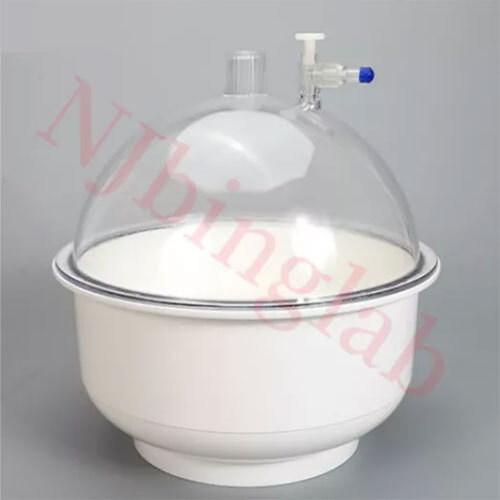
Tell us about your requirement

Price:
Quantity
Select Unit
- 50
- 100
- 200
- 250
- 500
- 1000+
Additional detail
Mobile number
Email

More Products in Lab Plastic Products Category
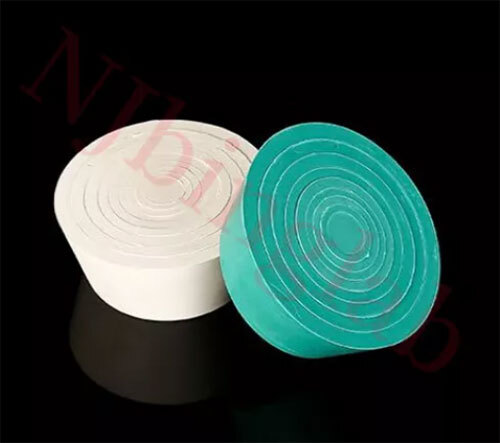
Rubber Funnel Holder
Minimum Order Quantity : 100 Pieces
Advantage : Prevents spills and breakage; Easy to clean; Longlasting rubber construction
Feature : Made from durable and chemicalresistant rubber; Nonslip design for stability
Use : For holding funnels securely in laboratories or industrial settings
Size : Standard size fits most laboratory funnels; Custom sizes available
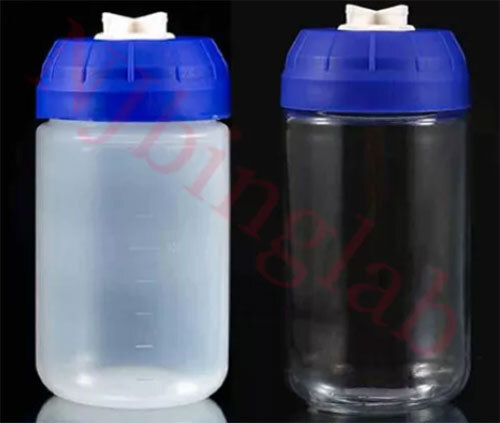
PP-PC High-speed Centrifuge Bottle 1000ML
Minimum Order Quantity : 100 Pieces
Advantage : Lightweight, reusable, designed for safe and efficient sample separation at high speeds.
Feature : Leakproof, high chemical resistance, autoclavable, durable against centrifugal forces.
Use : Ideal for highspeed centrifugation applications in laboratories.
Size : 1000ML
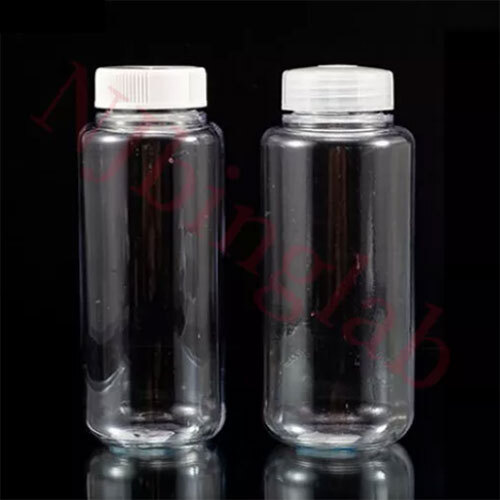
PC High-speed Centrifuge Bottle
Minimum Order Quantity : 100 Pieces
Advantage : Lightweight and shatterproof; provides high centrifugation safety and clear visibility of sample contents.
Feature : High mechanical strength, excellent chemical resistance, leakproof, and autoclavable.
Use : Suitable for highspeed centrifugation of samples in laboratory and research applications.
Size : Available in capacities of 250 ml and 500 ml.
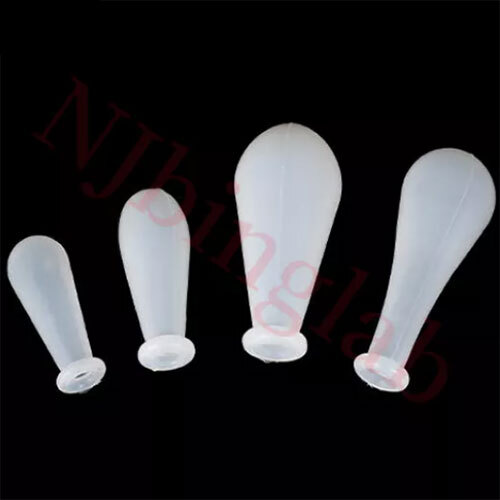
Silicon Teat
Minimum Order Quantity : 100 Pieces
Advantage : Nontoxic, BPAfree, easy to clean, durable, and resistant to heat
Feature : Soft, flexible, odorless, and tasteless silicone material
Use : Feeding infants safely and comfortably
Size : Standard size suitable for most feeding bottles

Contact Details

- No. 60, Shidai Avenue, Longchi Street, Liuhe District, Nanjing - 211599, Jiangsu, China
- Phone : 86--15805176994
- Ms Ross Guo (Manager)
- Mobile : +8615805176994
- Mr. Jimmy Luo
- Mobile : +8618020125661
- Send Inquiry
 Send Inquiry
Nanjing Binzhenghong International Trade Co., Ltd.
All Rights Reserved.(Terms of Use)
Developed and Managed by Infocom Network Private Limited.
Developed and Managed by Infocom Network Private Limited.
 English
 Spanish
 French
 German
 Italian
 Chinese (Simplified)
 Japanese
 Korean
 Arabic
 Portuguese